
Integrated Body Level 1: Reset & Reinforce
Create the Opportunity. Own the Movement.
Integrated Body Level 1 is a one-day, hands-on course focused on identifying movement barriers, creating meaningful short-term changes, and reinforcing those changes through active movement.
Rather than teaching a collection of isolated soft-tissue techniques, participants learn a repeatable decision-making process that can be applied using different modalities based on professional scope and setting.
The Reset Framework
Scan → Compress → Breathe → Move → Reassess
- Scan
- What are we noticing?
- Compress
- What amount of input is appropriate?
- Breathe
- Can the person accept the input?
- Move
- Can we introduce active motion?
- Reassess
- Did anything meaningfully change?
Participants may apply the framework using hands-on techniques when appropriate and within scope or through self-myofascial tools such as balls and rollers. The modality may change. The process remains the same.
The Reinforce Framework
Mobility → Stability → Force Production / Force Absorption
After creating an opportunity for improved movement, participants learn how to determine what the individual needs next.
- Mobility — Can they get there?
- Stability — Can they own it?
- Force Production — Can they create force?
- Force Absorption — Can they receive and manage force?
Hands-on demonstrations, partner practice, movement application, and case-based breakout sessions allow participants to work through the entire process:
Assess → Reset → Reassess → Reinforce → Reassess
Case applications include upper-body, torso/rotation, and lower-body movement problems so participants can see how the same framework transfers across different regions, goals, and professional approaches.
Upcoming Level 1 Course
Date/Time:
- Saturday, October 17, 2026 | 11:30 AM – 6:00 PM
Location:
- Lark Greensboro: 201 S Church St., Greensboro, NC 27401
Cost:
- Early Bird Pricing: $300
- Regular Pricing: $400
- Student Rate: $200 (email us for student rate)
Who Should Attend?
Integrated Body is designed for professionals and students working across the rehabilitation-to-performance continuum, including:
- Athletic Trainers
- Physical Therapists
- Chiropractors
- Massage Therapists
- Strength & Conditioning Coaches
- Personal Trainers
- Performance Coaches
- Exercise and Movement Professionals
- Students entering rehabilitation, exercise science, and performance professions
Participants are expected to work within their individual professional scope of practice throughout the course.
No single discipline is expected to solve every problem.
Understanding where your role begins, where it ends, and how to communicate across that continuum is part of good practice.
Myofascial and Movement Strategies for Performance
The Integrated Body is an interdisciplinary professional education series designed to bring rehabilitation, manual therapy, fitness, and performance professionals into the same room around a shared goal:
Helping the human in front of us move, perform, and adapt more effectively.
Different professions may use different tools. A manual therapist may work hands-on. A coach may use movement, breathing, positioning, or self-myofascial tools. A strength professional may use dumbbells, kettlebells, bodyweight, or other training modalities.
The tools may change.
The principles and decision-making process remain connected.
Integrated Body is not built around memorizing one technique or becoming dependent on one method. The courses provide practical frameworks that help professionals assess what they see, select an appropriate strategy within their scope, evaluate the response, and determine what should happen next.
Different Disciplines. Shared Principles. Better Collaboration.
Healthcare and performance professionals often work with the same human problems from different perspectives.
Integrated Body creates a common language that allows clinicians, therapists, and coaches to learn from one another while respecting differences in education, experience, and professional scope.
The goal is not for everyone to practice the same way.
The goal is to understand the continuum well enough to:
- Recognize what the person in front of you may need
- Apply strategies appropriate to your scope and setting
- Evaluate whether those strategies created a meaningful change
- Know when to progress, modify, or refer
- Communicate more effectively with other professionals
- Help clients and patients become more independent and resilient
Principles organize. Frameworks guide. Techniques serve. A Human-Centered Approach.
The Integrated Body Framework
ASSESS → RESET → REASSESS → REINFORCE → RELOAD → REASSESS
Reset — Lower the Barrier
Create a short-term opportunity for improved movement by addressing factors that may influence tension, comfort, mobility, awareness, or readiness.
Reset strategies may include hands-on techniques when appropriate and within scope, self-myofascial tools, breathing, positioning, or movement-based approaches.
Reinforce — Build Ownership
Use active movement to develop control and ownership of the available movement. Determine whether the current opportunity is primarily related to:
- Mobility — Can they get there?
- Stability — Can they own it?
- Force Production — Can they create force?
- Force Absorption — Can they receive and manage force?
- Reload — Develop Resilience
Apply appropriate and progressive stress to develop strength, capacity, adaptability, and long-term performance.
Reload asks:
- Can they do it?
- Is it challenging enough?
- Can they recover from it?
- Can they repeat it?
More Than Techniques
Techniques change. Tools change. Research evolves.
Our understanding of movement, pain, performance, and adaptation continues to develop. The Integrated Body is designed to evolve with it.
The purpose of the course is not to give practitioners a rigid system they must follow.
It is to provide frameworks that organize information, facilitate reasoning, encourage curiosity, and create space for professionals from different backgrounds to learn from one another.
The human in front of us remains the reason for the work.
Practical Coaching Experience
Integrated Body courses are designed to be experienced—not simply listened to. Participants will:
Learn it → See it → Coach it → Feel it → Reflect → Decide
Instructor demonstrations are followed by partner and small-group application. Participants are given opportunities to experience the concepts, practice decision-making, coach or apply strategies with others, and reflect on the response.
Depending on the course and professional scope, application may include hands-on strategies, self-myofascial tools, movement, breathing, strength training, or other available modalities.
The goal is not simply to perform the technique. It is to understand the principle, apply it, observe the response, and determine what should happen next.
- Building Autonomy & Adaptation
- Reset lowers barriers.
- Reinforce builds ownership.
- Reload develops resilience.
Ultimately, the goal is not to make someone dependent on a practitioner, therapist, coach, technique, or tool.
The goal is to help people understand their bodies, develop confidence, tolerate increasing demands, and adapt to the changing requirements of life and sport.
Level 2: Reload
Movement → Strength → Performance
Integrated Body Level 2: Reload builds upon the Reset and Reinforce framework by exploring how to appropriately load movement to create meaningful adaptation.
Reload is not a kettlebell course or an exercise certification.
It is a practical coaching and decision-making course taught through movement.
Participants learn how to assess readiness, establish movement competency, select appropriate exercises, manipulate training demands, communicate effort and discomfort, and progressively develop strength and resilience.
Reload Framework
- Movement Competency → Can they do it?
- Appropriate Challenge → Is it challenging enough?
- Adequate Recovery →Can they recover from it?
- Consistent Exposure → Can they repeat it?
Participants Explore
- The key components of movement
- Breathing optimization for performance and recovery
- Strength exercise progressions
- Progressive overload strategies
- Entry Point & Needs Analysis
- Health-First Coaching and programming under increasing demand
Through demonstrations, partner coaching, and an integrated training experience, participants learn to apply these concepts across different exercises and modalities while comparing what the coach observes with what the individual experiences.
The course concludes with a practical training lab that brings movement quality, breathing, recovery, and real-time coaching decisions together under load and fatigue.
The workout is not simply a workout. It is the final learning lab.
What Participants Are Saying
“This course was extremely valuable for coaches and practitioners who want a framework for assessing clients and programming. Additionally, you will learn how to be a more effective communicator, which is an essential skill as a coach.”
– Julian, Strength Coach
Previous Courses:
- The Integrated Body Level 1: Myofascial & Movement Strategies for Performance: May 30 – May 31, 2026 | Pinecrest, FL
- Integrated Body Level 2: Reload: August 16, 2026 | Pinecrest, FL
About Your Instructor
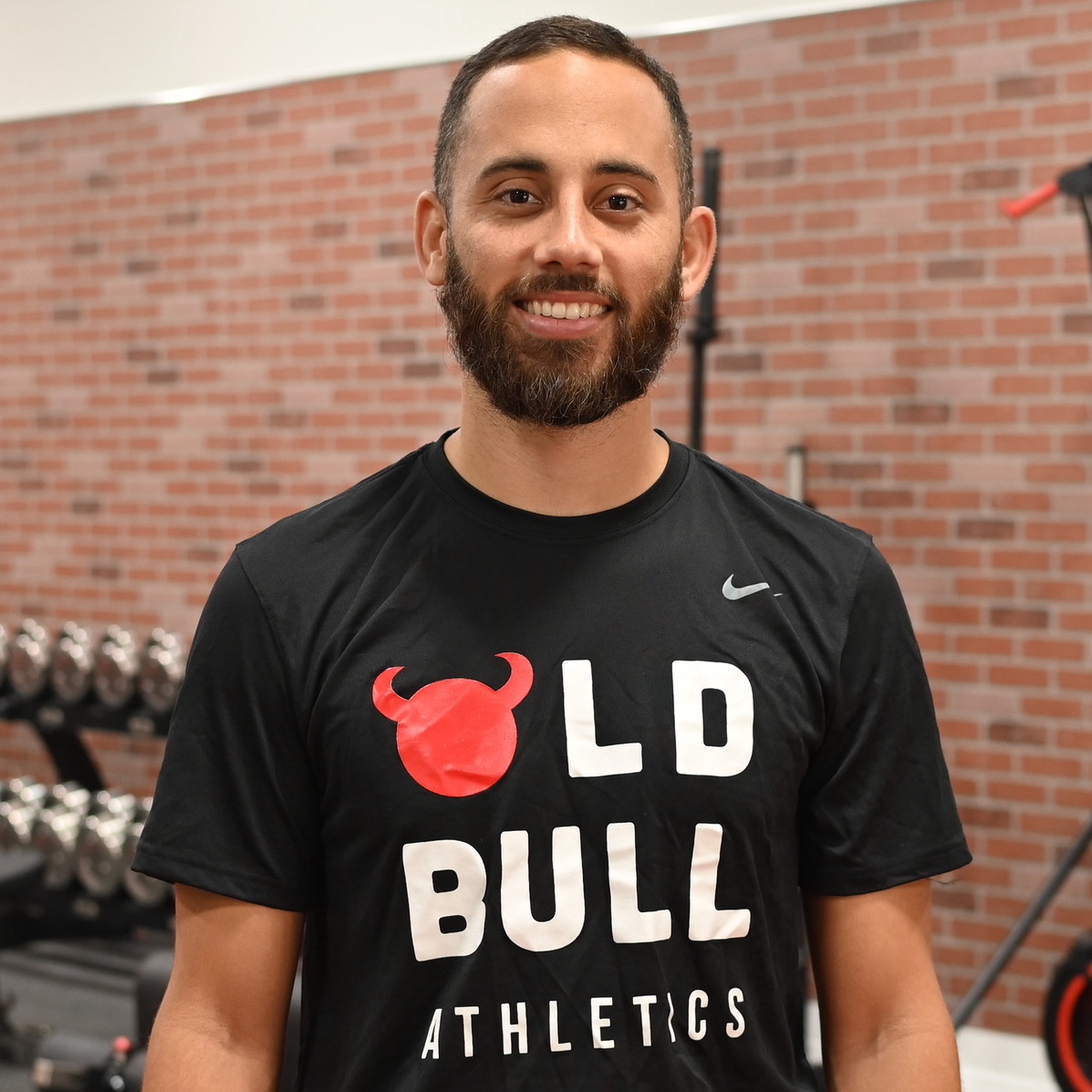
Andy Fortuna, MS, ATC, CSCS
Andy Fortuna is an Athletic Trainer, Performance Coach, and educator whose work has spanned rehabilitation, manual therapy, movement, strength training, and human performance.
His approach to education has been shaped by years of formal study, continuing education, clinical experience, coaching, and working alongside professionals from multiple disciplines.
After years of learning different techniques, systems, and methodologies, one theme continued to emerge:
The most useful tools are supported by strong principles, clear reasoning, and the ability to adapt to the person in front of you.
Andy created The Integrated Body to provide professionals with practical frameworks for organizing those principles, improving decision-making, and creating a shared language across rehabilitation and performance.
His goal is not to teach practitioners to work exactly as he does.
It is to help them think more clearly, coach more intentionally, collaborate more effectively, and expand the tools they already have.